Showing posts with label Musings On. Show all posts

Wednesday, March 14, 2012

On Fairy Tales

Hmm... Typing that reminds me of a particularly good essay by The Professor (an honorific for J.R.R. Tolkien used on the LOTRO Forums) called "On Fairy-Stories."  If you get a chance to read it do so.  It is worth it.

As one can probably tell from my posts on Once Upon a Time, I am a fan of fairy tales.  Make that a fairy-tale-oholic.  I don't know how many books/movies/etc. of fairy tales (or adaptations/recreations thereof) I have.  Now I am not the only fan of fairy tales, one only has to look at the entertainment industry to see that fairy tales are the new "it" theme.  Not only do NBC and ABC have shows based of fairy tales (Grimm, which I lost interest in months ago and the vastly superior Once) but there are not one but two Snow White movies coming out in the near(-ish) future (Mirror, Mirror and Snow White and the Huntsman).
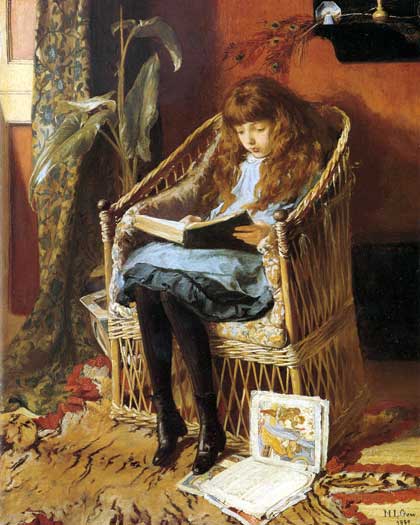
http://www.illusionsgallery.com/Fairy-tales-L.jpg
"Wait," you might be asking, "wouldn't that get repetitive?  They are all based on the same thing!"  Well...  No.  Saying that is like saying Twilight and Dracula are the same because they are both about vampires.  They aren't one is one of the great Horrors and the other is a kind-of trashy romance.  (I feel I am justified in saying that because I have read the entire "Saga."  I wish I hadn't, but I have.)  Likewise Once is Lost-esque, Grimm is a crime drama, Mirror, Mirror is a comedy and Snow White and the Huntsman is an action/drama (I think).  All are very different genres.

So there is a question begging to be asked, why are fairy tales so popular?  If you look at the world's state of affairs it is kind of obvious.  Economies aren't doing so well, heck even entire countries have gone bankrupt, the world vacuums  at the moment.  Is it any wonder people are liking something that reminds them of the point in their childhoods when they hadn't a care in the world?

Of course it is wise to remember the modern way of telling the tales is not he original way of doing so;  the tales have been "Disney'd."  That is made them all happy and cheerful while the originals were actually quite dark.  And rightly so!  Their purpose wasn't to entertain, they were cautionary tales.

Take Little Red Riding Hood, most people think it goes something like this, "Girl meets wolf in forest on way to Grandma's house.  Wolf runs ahead and eats/pretends to be Grandma.  Red shows up and talks about Grandma's features are so big.  Wolf is somehow defeated and Red and Grandma both survive."  Right?  Wrong.  Most of it is right but the ending this, "Wolf eats Red.  Then Woodsman comes along, kills the wolf and cuts Red out of its stomach."  Gruesome, right?  The point of the story is thus,

Children, especially attractive, well bred young ladies, should never talk to strangers, for if they should do so, they may well provide dinner for a wolf. I say "wolf," but there are various kinds of wolves. There are also those who are charming, quiet, polite, unassuming, complacent, and sweet, who pursue young women at home and in the streets. And unfortunately, it is these gentle wolves who are the most dangerous ones of all.
                                                                               Little Red Riding Hood

Tuesday, February 14, 2012

On Chapter Length and Pan-Universal Be-Who-You-Are Day


So here I was, in the midst of writing my first novel, and I thought “wait, how long should I be making my chapters?”  Now in reality I probably shouldn’t be thinking about it at this point, I should wait until the book is actually written.  I however have an overdeveloped sense of procrastination…

So there are two main schools of thought on this: short chapters and (you guessed it) long chapters.  (Sounds kind of obvious doesn’t it?)  They both have the goal to keep readers reading as long as possible.

Short Chapters – The mind frame for short chapters is that if a reader knows the next chapter is only a few pages, as opposed to fifty pages, he or she is more likely to continue reading.  They can also be used to give a sense of the book being fast paced, whether or not it actually is.  Shorter chapters also, in my opinion, lend themselves to a Spartan or succinct writing style, one without a lot of description or exposition.  I have found that short chapters are more common in thrillers and such, though are not limited to them.  Witch & Wizard by James Patterson is a fantasy with short, sometimes incredibly short, chapters.

Long Chapters – With long chapters the goal is to give readers as few breaking points as possible.  The rationale being readers do not want to end their reading session in the middle of something.  I don't know if I quite agree with this, I for one will stop just as often in the middle of a chapter as at the end of one.  The writing style best suited for long chapters is a verbose one, in a good way, much like Brandon Sanderson or Pat Rothfuss have.  Long chapters are common in the High and Epic sub-genres of Fantasy, which also happen to be the genres I most often write in.  I guess this means I should be going for longer chapters…

On a side note Happy Pan-Universal Be-Who-You-Are Day!  (Formerly known as Interplanetary Be-Who-You-Are Day)  Kristin Cashore is a talented writer who, like me, is not really a fan of Valentine’s Day.  I dislike how V-Day is so divisive (between those who are in a lovey-dovey relationship and those who aren’t), and really shouldn’t you treat your significant other awesome all the time?  Some arbitrary day should not make you; you should do it on your own.

Saturday, January 14, 2012

On Pen-Names

Pen-names, pseudonyms, noms de plume.  They are all labels for the same thing; authors publishing a work under a name-not-their-own.  So why do people do it and when is it appropriate?  For three major reasons.
  1. To avoid being pigeon-holed: The late James Oliver Rigney, Jr. once picked up a book by an author he liked.  Imagine his surprise when he read it and discovered it was an entirely different genre than he was expecting!  It was at that point he decided to use a different name for each genre he wrote in.  He is probably best known for his fantasy pseudonym, Robert Jordan.  He is far from unique in this however, David Farland/Wolverton is another who uses one name for Fantasy and another for Science-Fiction.
  2. For marketing reasons: In some cases when an author's name is incredibly common or hard to remember they change it to something unique and memorable.  Or when their own name would cause an unfortunate double-entendre in their chosen genre (this is most common in romance).  As in the case of myself, some find their name is the same or similar to another, established author.  Of those with my first name, I would say the majority of their last names begin with the same two letters (curse you Scottish surname practices -  just kidding).  Another common occurrence is that female authors take on a masculine or gender-neutral name to draw in male readers (female readers are generally less biased by gender).  A well-known of this is Joanne Murray (née Rowling) who published the Harry Potter series under the name J.K. Rowling.  While not strictly an actual pseudonym, this is a perfect example of this reason.
  3. Privacy: Probably the simplest, and yet the most important, reason.  Some people do not want to be famous or at least be recognized in public, if only by name.  I for one want to keep my writing and online persona separate an distinct from my personal life.
In my opinion these are all justifiable reasons to use a pen-name.  What I wouldn't support is using a pen-name.  What I wouldn't support is using a pen-name because it is "cool" or "mysterious."  Pen-names should be used for non-trivial reasons.  So what do you think?